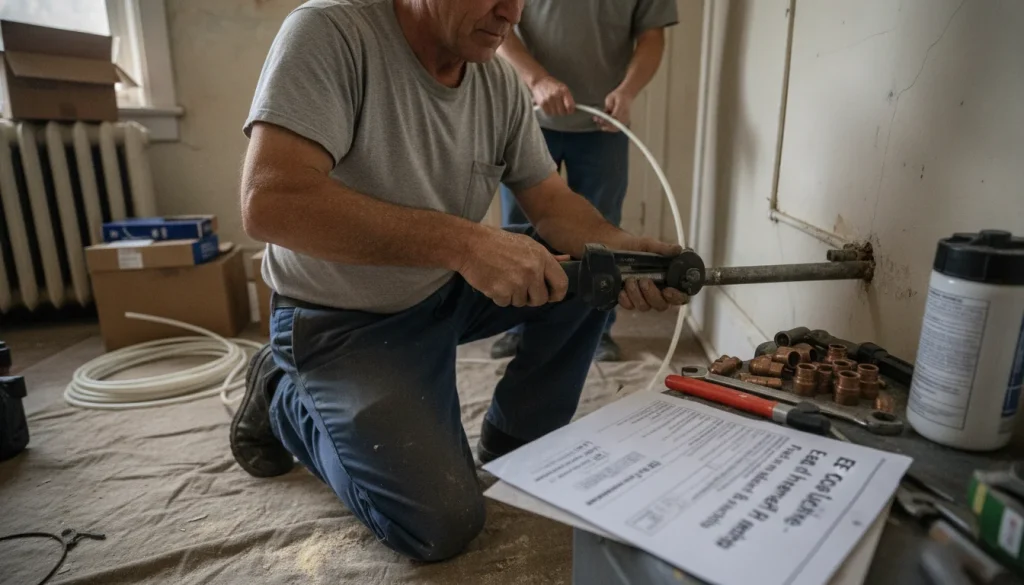
A ceiling stain appears after a quiet night. One floor area feels oddly warm. The water bill climbs with no obvious cause. When this happens, owners face a practical choice: repiping vs spot repairs. Here’s the direct answer up front: repiping replaces most or all supply lines in a planned project, while a spot repair fixes one targeted failure. The best path depends on pipe age, leak history, water quality, and how easily your system can be accessed in Land O Lakes. The aim is to protect your property, time, and peace of mind.
Key Takeaways
- Repiping addresses system-wide risks; spot repairs solve a single fault. Match the fix to the cause.
- Consider lifetime cost: repeated openings, restoration, and downtime can exceed a one-time repipe.
- Diagnostics (acoustic, thermal, and pressure tests) help confirm whether failures are isolated or widespread.
- Material and code choices matter in Florida; pick options that fit your water chemistry and layout.
- Plan work with remodels to minimize disruption and document everything for insurance and resale.
Plumbing Land O Lakes serves homes and businesses throughout Land O Lakes every week, guiding owners through this decision. This comparison outlines the warning signs, diagnostics, codes, timelines, and long-view value so you can weigh options confidently in Florida and around the Land O' Lakes area.
Table of Contents
- Repiping vs spot repairs: what each option really means
- Warning signs and diagnostics before you decide
- Costs that matter: upfront vs lifetime total cost of ownership
- Materials, code compliance, and expected lifespan
- Decision framework: when repiping wins and when repairs make-sense
- Project logistics, timelines, and level of disruption
- Insurance, warranties, financing, and ROI
Repiping vs spot repairs: what each option really means
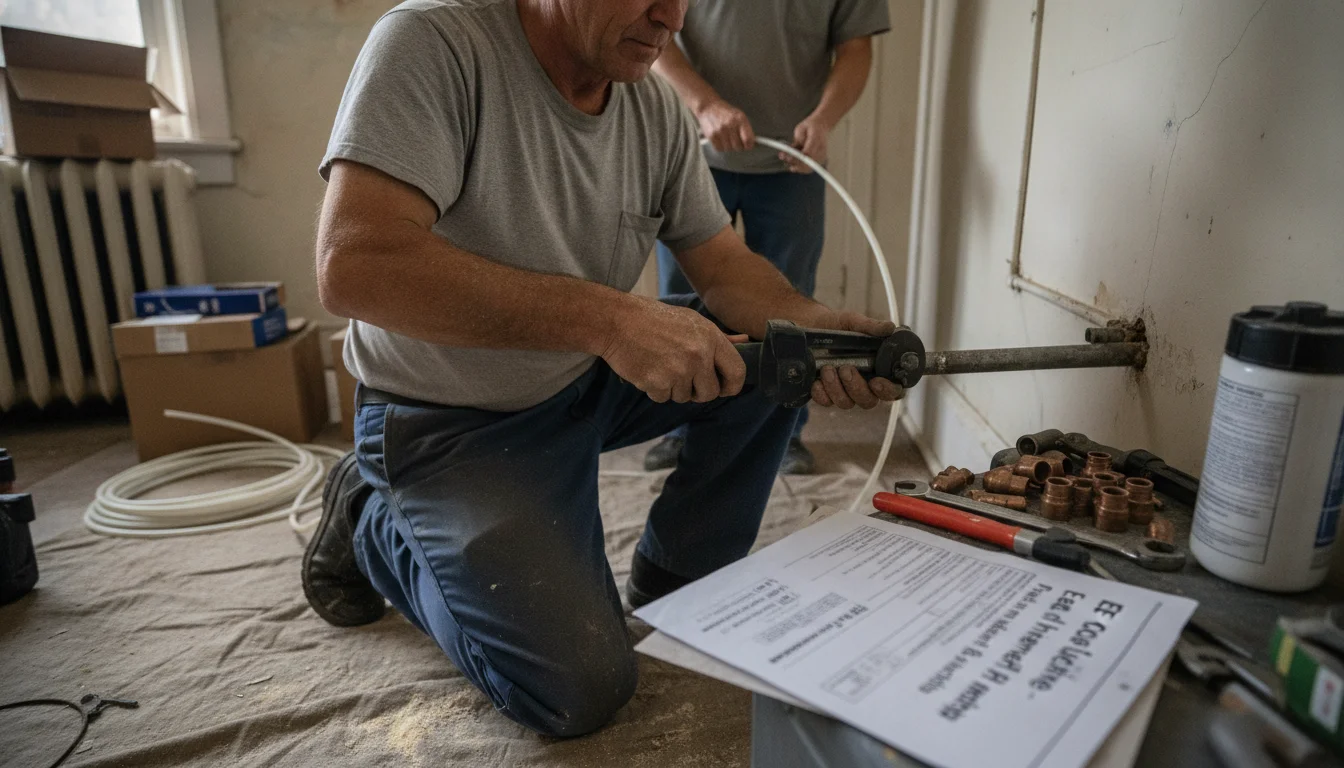
A repipe is the deliberate replacement of most or all water supply piping in a home or building. It typically includes new shut-off valves, fixture supply lines, and proper supports. Crews open small, planned wall or ceiling areas, route new lines, and cap or abandon the old piping. The result is a refreshed system with steady pressure and cleaner water.
A spot repair is a targeted fix on a single leak or failing section. A plumber exposes the fault, removes the damaged portion or fitting, and installs new components. That might be a short run of new pipe, a coupling, or a replacement valve. The goal is fast resolution of one issue with minimal access work.
Both approaches use licensed methods and code-approved materials. The difference is scope. Repiping addresses age, corrosion, or material-related risks throughout the system. A repair resolves one break, pinhole, or loose joint. If failures keep appearing in different places, another small fix may only delay the next incident.
For many owners in Land O Lakes, the choice affects daily routines. Can you handle multiple service visits over time, or is a single, planned project preferable? Plumbing Land O Lakes can walk you through pros and cons for your floor plan, fixtures, and water demands.
What a full repipe includes
A full repipe starts with mapping the system, planning routes, and protecting finishes. Crews set dust control, shut off water in stages, and open neat access points. They install new lines, pressure test, sanitize, and restore surfaces. Expect new angle stops, supply tubes, and correct supports. Old galvanized or deteriorated copper is removed from service.
What counts as a spot repair
Typical repairs include stopping a pinhole, replacing a failing section under a slab by rerouting overhead, or swapping a bad valve. Limits show up when leaks repeat, pipe walls thin, or corrosion spreads along runs. In those situations, additional patches can raise long-term risk and disruption.
Warning signs and diagnostics before you decide
Plumbing often signals trouble before a major failure. Watch for rust or green discoloration at fittings, frequent pinholes, or damp drywall. Sudden pressure changes, cloudy or metallic-tasting water, and hot-cold swings can also indicate problems. Age is a big factor: older galvanized lines corrode internally, while copper can develop pitting from water chemistry or velocity.
Leak patterns provide context. One failure near a water heater could reflect local heat stress. Multiple leaks across rooms or floors usually point to system-wide aging. Slab leaks may show up as warm spots on flooring, a spinning water meter with all fixtures off, or swelling at baseboards.
Pros confirm hidden issues with specialized tools. Acoustic leak detection listens for escaping water under pressure. Thermal imaging reveals heat signatures from hot lines or damp zones inside walls. Pressure testing verifies hold at specified levels. Dye and moisture meters help track ceiling or floor stains back to their source.
For water quality, licensed plumbers can check municipal reports and test at your taps. If you have concerns about lead service lines or fixtures, follow federal guidance on testing and risk controls under the EPA’s Lead and Copper Rule (EPA Lead and Copper Rule).
If you’re dealing with an active break, use Emergency Plumbing right away. Shut off the main, open a low faucet to drain the system, and keep people out of wet areas. For standing water or a constant meter spin, Leaks & Burst Pipes is the appropriate service to isolate, repair, and stabilize the system.
How pros verify problems
- Acoustic listening: Finds pressurized leaks behind finishes.
- Thermal imaging: Maps hot lines and damp areas.
- Pressure testing: Confirms tightness before walls are closed.
- Endoscopic cameras: Inspect accessible chases and voids.
- Water tests: Evaluate pH, hardness, and metals that drive corrosion.
Costs that matter: upfront vs lifetime total cost of ownership
Total cost of ownership means the full expense across the life of your choice. With plumbing, that includes the first fix, any future service calls, potential water damage from later leaks, and your time lost during disruptions. You also need to factor in finish repairs, access openings, and any code-driven upgrades.
A single repair usually has a lower upfront bill than a whole-home project. But the long view can flip that math if failures continue. Multiple visits, repeated drywall work and painting, and periodic water shutoffs add up. A planned repipe consolidates access, testing, and restoration.
Look beyond today. Think in five- to ten-year terms. Does pipe age suggest more failures soon? Are you planning a remodel that will open walls anyway? Pairing a repipe with a renovation reduces dust, rework, and duplicate restoration.
Hidden consequences matter. Water damage can affect framing, floors, cabinets, and insulation. Mold may require removing wet materials and specialized cleaning under containment according to industry guidance such as the IICRC S500 overview (IICRC S500 Overview). For businesses, downtime risks include lost revenue, tenant impacts, and reputational harm.
When comparing repiping vs spot repairs, list the soft costs too. Time away from work, moving furniture repeatedly, and access to one bathroom versus two all shape the real cost of your plan in Land O Lakes and nearby neighborhoods.
What to consider beyond the invoice
- Damage risk: One kitchen leak can affect many finishes and cabinets.
- Repeat access: Opening and patching the same wall repeatedly is disruptive.
- Scheduling: One planned window versus many urgent, unplanned visits.
- Insurance: Understand limits on gradual leaks before choosing a path.
Materials, code compliance, and expected lifespan
Pipe material drives performance and service life. Copper is durable and proven, tolerating UV and heat, and looks tidy on exposed runs; it can, however, pit in aggressive water and requires skilled soldering. PEX is a flexible plastic that threads through tight spaces, needs fewer fittings, and tolerates freeze expansion better than rigid pipe; it must be protected from sunlight and high heat sources.
CPVC is a rigid plastic rated for hot water that glues together and resists corrosion, though it can be brittle under stress and needs proper support. Older galvanized steel corrodes internally, narrowing flow and causing discoloration; these lines are typically candidates for replacement rather than patching.
Local code in Florida and Pasco County sets rules for approved materials, supports, valves, and testing. Most jurisdictions follow versions of the International Plumbing Code or Uniform Plumbing Code. Your contractor should pull permits, perform pressure tests, and install shut-offs and hammer arrestors where required. Manufacturers publish installation manuals and warranty terms that must be followed.
Water chemistry and pressure are critical. High static pressure strains joints and valves and may require a pressure-reducing valve to stay within range. Aggressive or low-pH water can accelerate corrosion; pros can test and recommend suitable materials for your block and building era in Land O Lakes.
For lead risks in older homes, review EPA guidance on lead in homes and plumbing components to inform fixture choices, filtration, and replacement steps (EPA Lead in Homes). Always select third-party-listed materials and adhere to code.
Expected service life at a glance
- Copper: Long service life with proper sizing and compatible water chemistry.
- PEX: Long life; fewer fittings mean fewer potential leak points.
- CPVC: Solid option where allowed; avoid impact and ensure correct supports.
- Galvanized: Often near end of life in older homes; consider full replacement.
Decision framework: when repiping wins and when repairs make sense
Start with age and failure rate. If your property has multiple leaks in a short span, a repipe often makes more sense than continued patches. If the lines are relatively new and the failure ties to one fitting or event, a spot repair can suffice. Align the solution with the underlying cause, not just the symptom.
Consider timing. If you’re planning a kitchen or bath remodel, add a repipe to that scope. Since walls will open anyway, you’ll reduce repeat dust, noise, and finish repairs. If you just remodeled and one valve failed, a careful localized fix helps protect new tile and cabinetry.
Water access during work matters for families and businesses. A repipe can be staged so at least one bathroom stays active most of the day. Spot repairs are faster, but frequent return visits can still interrupt meals, showers, or operations. The right plan balances speed with long-term calm.
Commercial and multifamily properties have different stakes. A single leak can affect many users, and downtime may lead to lost income, rent credits, or compliance issues. A planned repipe during low-use windows can lower risk. Spot repairs still make sense for isolated fixtures, such as a single unit’s angle stop or a mechanical room valve.
Use this simple flow:
- Map leaks over time. Many zones? Lean toward repiping.
- Check material and age. Old galvanized or thinning copper? Repiping is likely.
- Review water quality and pressure. Aggressive water or high pressure? Choose materials and controls wisely.
- Coordinate with remodels. Open once, finish once.
- Confirm access. Complex chases and tight routing often favor flexible PEX.
Residential vs. commercial triggers
- Residential: Two or more leaks in a year, discolored water, and outdated materials point to replacement.
- Commercial/multifamily: Occupancy, safety obligations, and downtime costs often favor planned replacements.
Project logistics, timelines, and level of disruption
Repiping is a coordinated effort. Expect a site walk, permits, and a clear access plan. Crews protect floors, set dust control, and cover belongings. Water is turned off in timed blocks, not continuously. New lines are run, supported, and tested. Surfaces are closed and patched after inspections. Final steps include flushing and sanitizing lines.
Most single-family repipes take several days, depending on size, story count, and finish types. Multi-story homes, complex chases, and plaster can add time. With good staging, at least one bathroom typically remains usable for much of the day. Many owners can stay in the home if short water-off windows are manageable.
Spot repairs are concise. The plumber locates the fault with acoustic or thermal tools, isolates the section, and opens a small access point. After repairs, they pressure test and dry the cavity. Drywall and paint follow. Many cases wrap up the same day.
If a pipe bursts, shut off the main immediately. Open a low tub spout or hose bib to drain the system. Relocate valuables from wet zones and avoid standing water for electrical safety. Contact Emergency Plumbing for rapid help and then schedule Leaks & Burst Pipes for diagnostics and permanent pipe repair. If your failure involves hot water supply, Water Heater Repair can address no-hot-water issues stemming from the event.
Garbage Disposal Repair, Kitchen Plumbing, and other fixture services can be bundled after a repipe so new supply lines and updated fixtures align. Coordinating these tasks helps reduce rework and ensures your kitchen and baths operate reliably once walls are closed.
What to expect from crews
- Clear schedule: Defined daily start and stop times.
- Containment: Floor protection and dust control at access points.
- Testing: Pressure tests before close-up and inspection.
- Updates: Simple daily notes on progress and next steps.
Insurance, warranties, financing, and ROI
Insurance often treats sudden, accidental water releases differently from long-term seepage. Coverage for the break itself, access, and build-back varies by policy. Many policies exclude gradual leaks. Document conditions with photos and keep repair reports and moisture readings. The Insurance Information Institute outlines common water loss categories and claim tips (III Water Damage Basics).
Contractors typically provide workmanship warranties, and pipe manufacturers back materials when installed to spec. Clarify what is covered and the duration. Keep permits, inspections, and pressure test records. These documents help with future sales, maintenance planning, and any claims.
Payment approaches differ by contractor and scope. Some owners phase projects, starting with the most at-risk zones. Others pair repiping with renovations to minimize overall downtime. Long-term value appears as fewer emergency calls, steadier pressure, cleaner water, and confidence that hidden leaks are less likely to derail your week. Buyers also tend to favor documented upgrades.
Frequently Asked Questions
What should I do first when a pipe bursts?
Turn off the main water valve, open a low faucet to drain lines, safeguard power sources from water, and move items out of wet areas. Then arrange Emergency Plumbing for immediate stabilization and follow up with Leaks & Burst Pipes to locate and complete the pipe repair.
How do I know if a small fix is enough?
If lines are newer and the failure is clearly tied to one joint, valve, or event, a localized plumbing repair can be a smart move. If leaks recur in different rooms, water looks discolored, or pressure sags due to aging lines, a planned repipe usually addresses the root cause.
Which pipe material lasts the longest?
Copper, PEX, and CPVC all deliver long service lives when installed properly and matched to your water chemistry and pressure. Galvanized steel is typically near the end of life in older homes. Your licensed plumber will align materials with code, layout, and local conditions in Land O Lakes.
Will insurance cover a repipe after a leak?
Policies vary. Many cover sudden breaks but exclude long-term seepage. Some include access and build-back, while others do not. Save photos, invoices, and inspection notes, and consult your carrier before starting major work to understand potential repair costs you may bear.
How do I find reliable pipe repair near me?
Look for a licensed, insured plumber with strong local reviews and clear warranties. Ask about diagnostics, permits, and the materials they recommend. Plumbing Land O Lakes can inspect, pressure test, and explain options—from single-point pipe repair to a full repipe—so you can choose with confidence.
Key takeaways
- Match the fix to the underlying cause, not just the symptom.
- Weigh lifetime costs and disruptions, not only today’s visit.
- Choose materials that fit local water chemistry and code.
- Align work with remodels to limit dust, noise, and rework.
- Keep thorough records for insurance and future resale.
Conclusion
Choosing between repiping vs spot repairs comes down to risk tolerance, time, and the likelihood of repeat issues. A focused repair can end one leak quickly, while a well-planned repipe can close the chapter on recurring failures and hidden water damage. Across the Land O' Lakes area—from Dupree Gardens and Lake Padgett Estates to Lutz, Wesley Chapel, Odessa, Connerton, and nearby communities—Plumbing Land O Lakes helps owners weigh options with clear diagnostics and licensed workmanship. Contact us
If you are not sure which of these you are dealing with, it is worth having someone look at it before it turns into a bigger job. Get in touch with Plumbing Land O Lakes today and we will tell you where you stand.